Battlefields
Setting up armies
There are several different but equally acceptable ways of setting up armies for a battle. In the scenarios it is often specified which side deploys first or how the units are deployed. However, where a game is played without a specific scenario or a scenario is played where no deployment is specified, players can deploy in any mutually agreeable fashion. The following are commonly used and provide an evenhanded way of deploying.
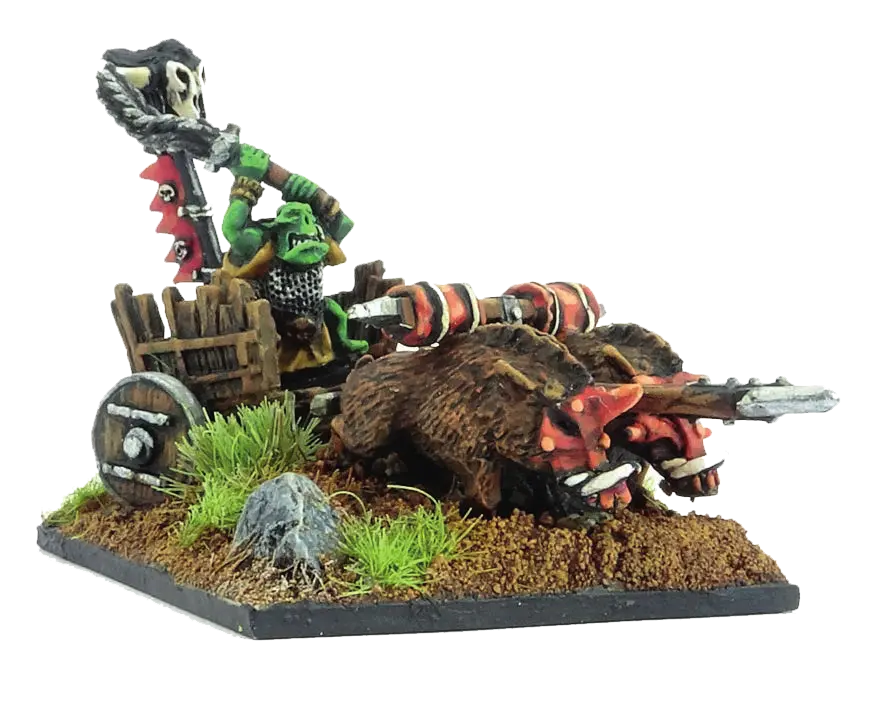
One unit at a time. Each side deploys one unit at a time onto the table starting with the player whose army has the most units. If both armies are the same size roll a dice to decide who goes first. Once one player has no units left, his opponent places the rest of his units on the battlefield. Characters are placed once all units are in position, either all at once or one at a time in the same way as units.
Maps. Each player makes a sketch map of his table edge and draws the positions of his units and characters. Once both players have completed their maps they are placed on the table and the armies are deployed by each player in accordance with the position indicated.
Screens. A screen is set up across the centre of the table and each player sets up his army out of sight of the other. Once both armies are deployed the screen is removed and the dispositions revealed.
One side first. Both players roll a dice and the highest scoring player decides whether to set up first or second. One side then sets up its entire army first, then the other side sets up. The side that sets up first decides who takes the first turn.
Scouts. This way of setting up the armies is described in detail below.
Setting up scenery
It is entirely up to the players to decide on how to set up the scenery before the armies deploy. However, we recommend you use between 6 and 10 significant scenery pieces, evenly distributed across the table.
For example, a battlefield might include 2-3 forests, 2-3 hills, 2-3 areas of broken or marshy ground, 2-3 low walls and 1-3 other pieces. Terrain pieces are typically around 15cm × 30cm.
Here are some ways to set up scenery.
Dice for Edges. Both players help to construct the battlefield, after which they roll a dice to see which table edge they fight from. As neither player knows which edge he will start from, it is in their interest to make a battlefield that is reasonably balanced.
One player sets up and his opponent chooses which edge to fight from. One player sets up the terrain and the other decides which of the opposing edges he will fight from. This is a good method when one player is travelling to another’s house as it enables the host to set up the scenery beforehand.
Symmetrical set up. The scenery is laid out perfectly symmetrically so that no advantage is conferred to either side. This is a bit mechanical and rather unrealistic but it’s certainly fair in principle.
Table size and deployment areas
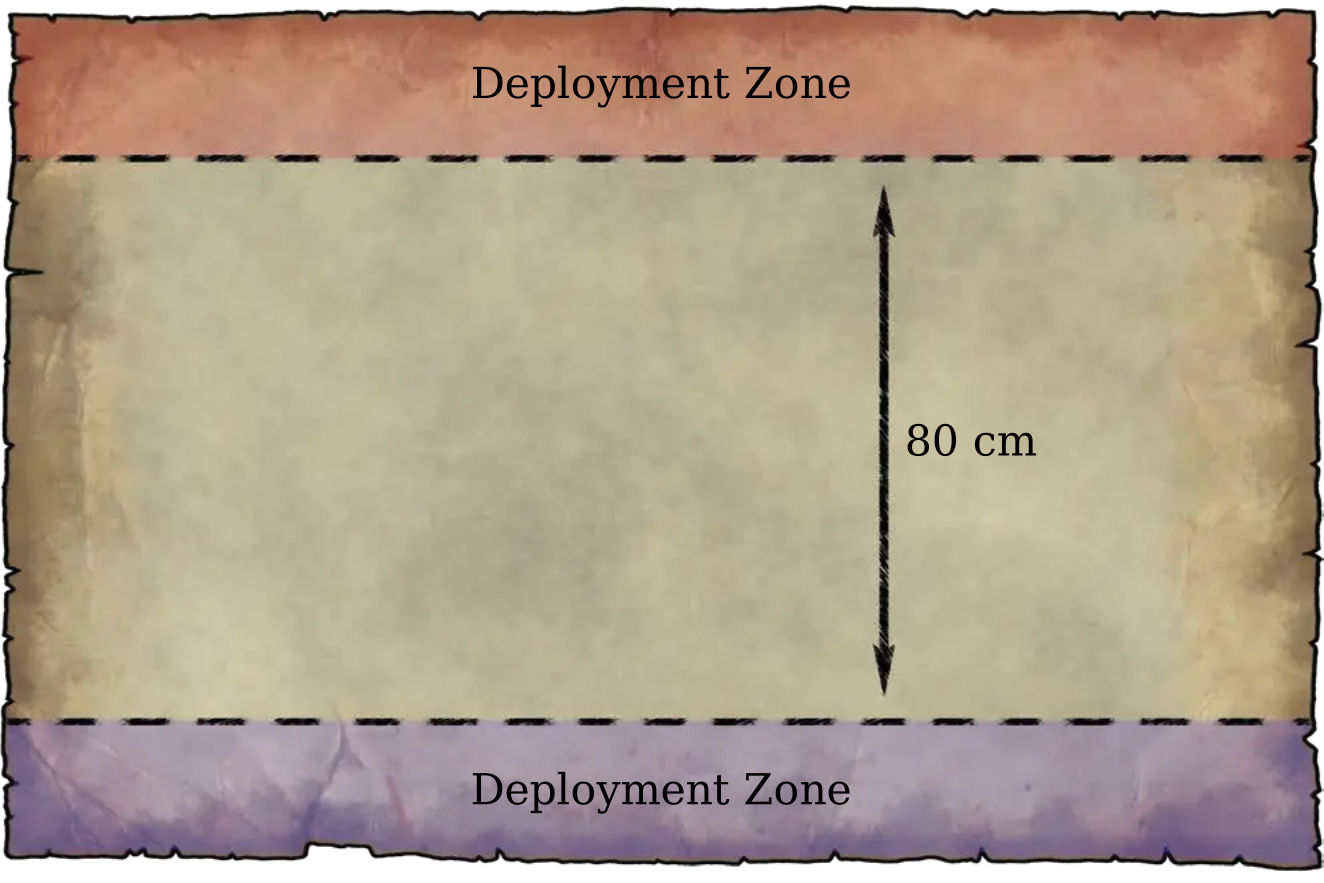
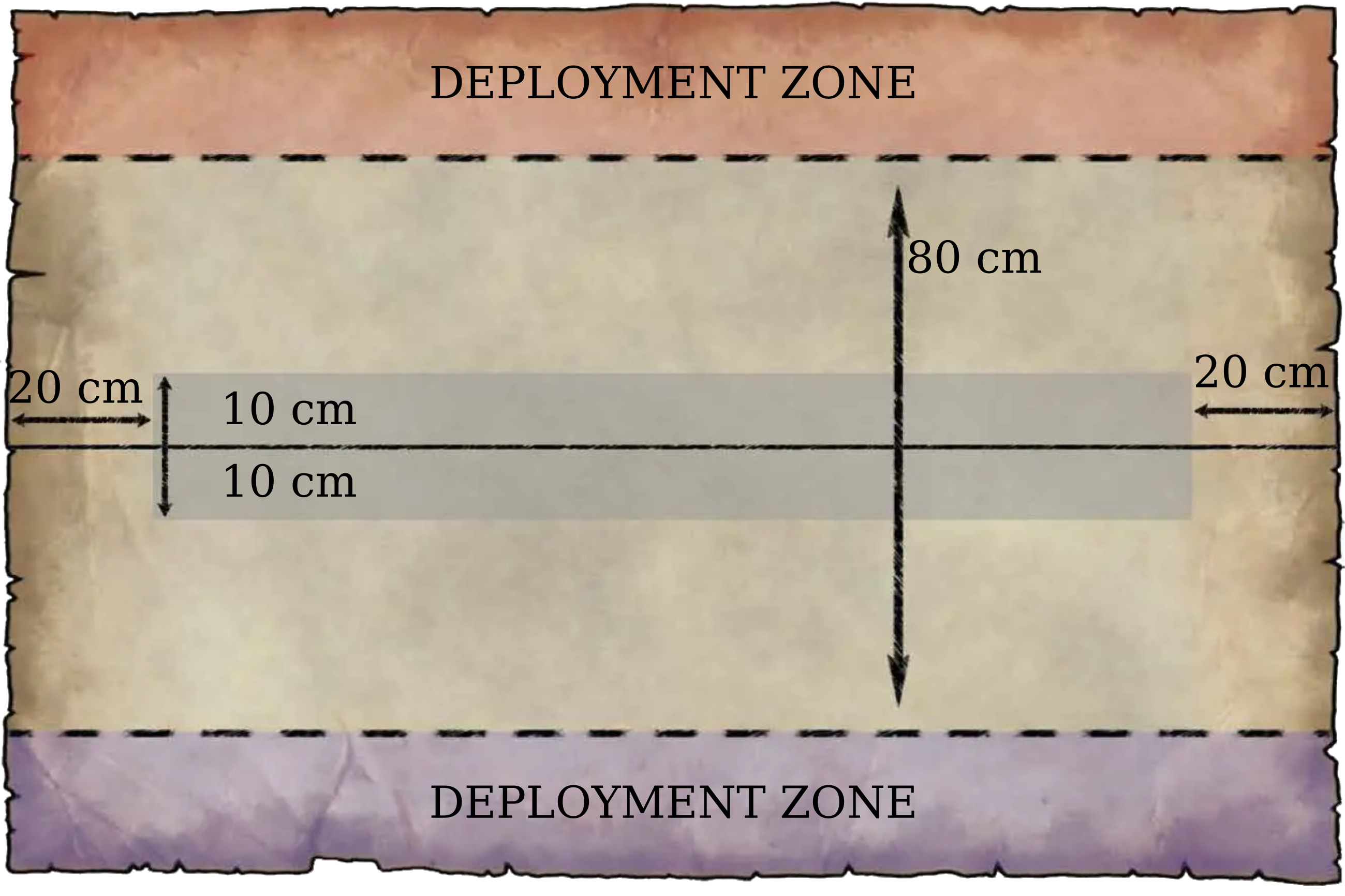
Warmaster has been developed for 1.8m × 1.2m (6′×4′) gaming tables. It can be played on a slightly smaller or much larger table using suitably sized forces. Armies need about 20cm of depth hence the standard game rule is that armies deploy along opposite table edges 80cm apart.
Scouting
Scouting rules are an alternative way of deploying your armies. They represent the pre-battle struggle for information between opposing armies’ scouts, and their commanders carrying out personal reconnaissance.
Before the game starts, players must indicate on their army lists which units and/or characters they wish to commit to scouting. Using the table below count the total number of committed scouting points.
| Role | Scouting points | Troop types |
|---|---|---|
Flyers |
3 |
Flying units, flying characters or characters on flying mounts; Dwarf Rangers; Nippon Ninja; Skaven Gutter Runners; Ogre Gorgers; Wood Elf Waywatchers |
Scouts |
2 |
Cavalry units with 6+ Armour; Ethereal Hosts; Warhounds; Huntsmen; Beastherd Gor/Ungor deployed as ambushers; Skirmishers; non-flying General |
Patrols |
1 |
Cavalry units with zero or 5+ Armour; Skaven Rat Swarms; Lizardmen Skinks; non-flying command 8 characters. |
Each player then rolls 2D6 and adds this to their scouting points total. The player with the higher result chooses the table side and places his committed scouting units and/or characters within the deployment zone. Units which are allowed to infiltrate or ambush do not need to be placed at this stage. Scouts and Patrols that are an addition to units (such as Empire Skirmishers) are deployed with the rest of their unit.
Next the player with the lower total must place all of his units and characters within his deployment zone.
Finally, the player who won the scouting roll then places the remainder of his units in his deployment zone. This player must move second in the first turn.
How long does the battle last?
There are several ways to determine how long the battle will last. Here are some of them described in detail. In any case the battle ends when one side concedes or withdraws.
Unlimited time. Players may prefer to play a battle without any fixed end. In such cases the battle ends when one side concedes or withdraws because their General is slain, or their break point is reached.
Agreed on beforehand. Players may simply agree on the number of turns before the game begins.
Random length decided beforehand. Roll a dice and consult the table below to see how long the battle will last.
| D6 | Game Length |
|---|---|
1–2 |
5 turns |
3–4 |
6 turns |
5–6 |
7 turns |
Random length. At the end of the 5th turn, roll a dice. On the roll of 4+ the battle ends. Otherwise repeat the roll on the end of the next turn. The game definitely ends at the end of the 8th turn.
Time limit. Apart from the number of turns, the length of the game can be set by a time limit. If no side breaks when the time limit is reached, then the side with the most victory points is the winner. Alternatively the death clock can be used, in which case the side that runs out of time first is the loser.
Scenarios
The simplest way to play a game is by lining the armies up across the battlefield 80cm apart using one of the methods described. Although easy, this seems unnecessarily dull when you could embellish each battle with its own story. So why not have a go. The following scenarios present examples of how battles can be fought. You can play these exactly as they are, or you can change the objectives and other details to suit yourselves. There are no rules when it comes to creating a battle. It’s up to you to invent an entertaining plot or spin a fantastic yarn to underpin the game.
There are 5 scenarios on the following pages. Together with an ordinary pitched battle it makes 6 ways to play. You can pick whichever scenario you agree on with your opponent or alternatively you can use the following table to choose by chance.
| D6 roll | Scenario |
|---|---|
1 |
Pitched battle |
2 |
|
3 |
|
4 |
|
5 |
|
6 |
Take and hold
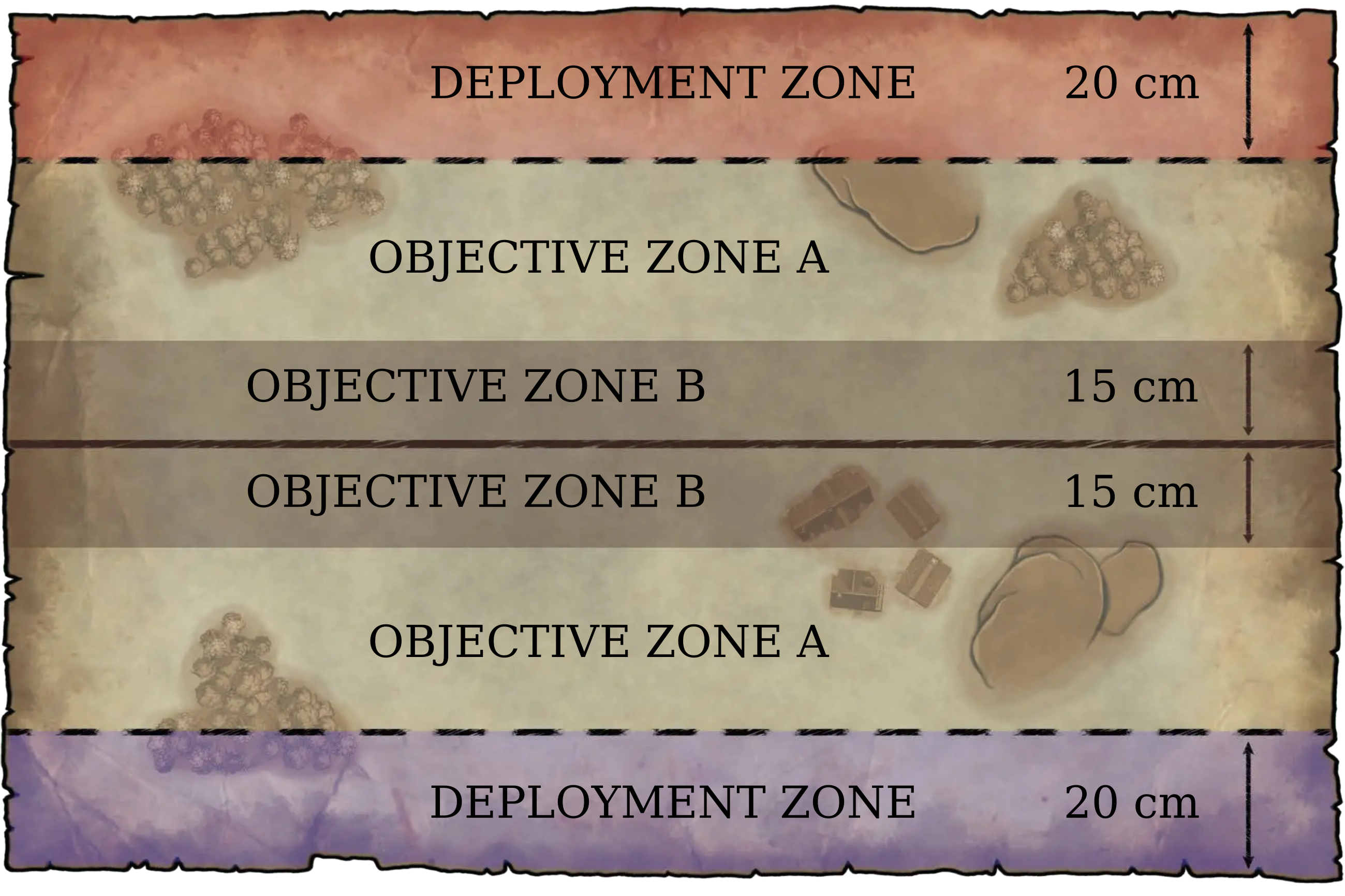
The aim of this scenario is to fight over certain objectives rather than just breaking your opponent. The scenario is designed for 2000 point armies. When playing a smaller game, divide the Victory Points in the scenario by 2.
Special rules
After terrain is set, players take turns in placing four game objectives. These can be any kind of markers or preferably some terrain features, such as buildings, lone trees, shrines etc. Two of the objectives should be placed within 15cm of the central table line (objective zone B). Place the remaining two objectives outside this zone as well as outside the deployment zones (objective zone A). In each objective zone A there should be one objective. Place the objectives at least 5cm from any terrain feature and at least 30cm from each other.
After the objectives are placed, roll for sides and deploy your armies within the deployment zones (see Setting up armies).
Victory points
Victory Points are awarded not only for destroying enemy units but also for holding the objectives during the game. Victory Points for holding an objective are scored by a player if a non-confused unit is at least partially within 5cm of the objective while there are no enemy units within 5cm of the same objective at the end of each player’s turn from 3rd turn on. Flyers cannot hold objectives, however, they can contest them. The number of awarded points depends on where the objective lies
100 Victory Points for holding the objective on your side of the table.
200 Victory Points for holding an objective on the enemy side of the table.
The game ends when one side withdraws – that happens when one side reaches its break point or when the opponent collects 1000 Victory Points by holding objectives. The game also ends when the turn/time limit set in a pre-agreed way runs out (see How long does the battle last?).
The player with more Victory Points is the victor unless he withdrew, in which case the game is a draw (see End of the Battle).
Battle for the tower
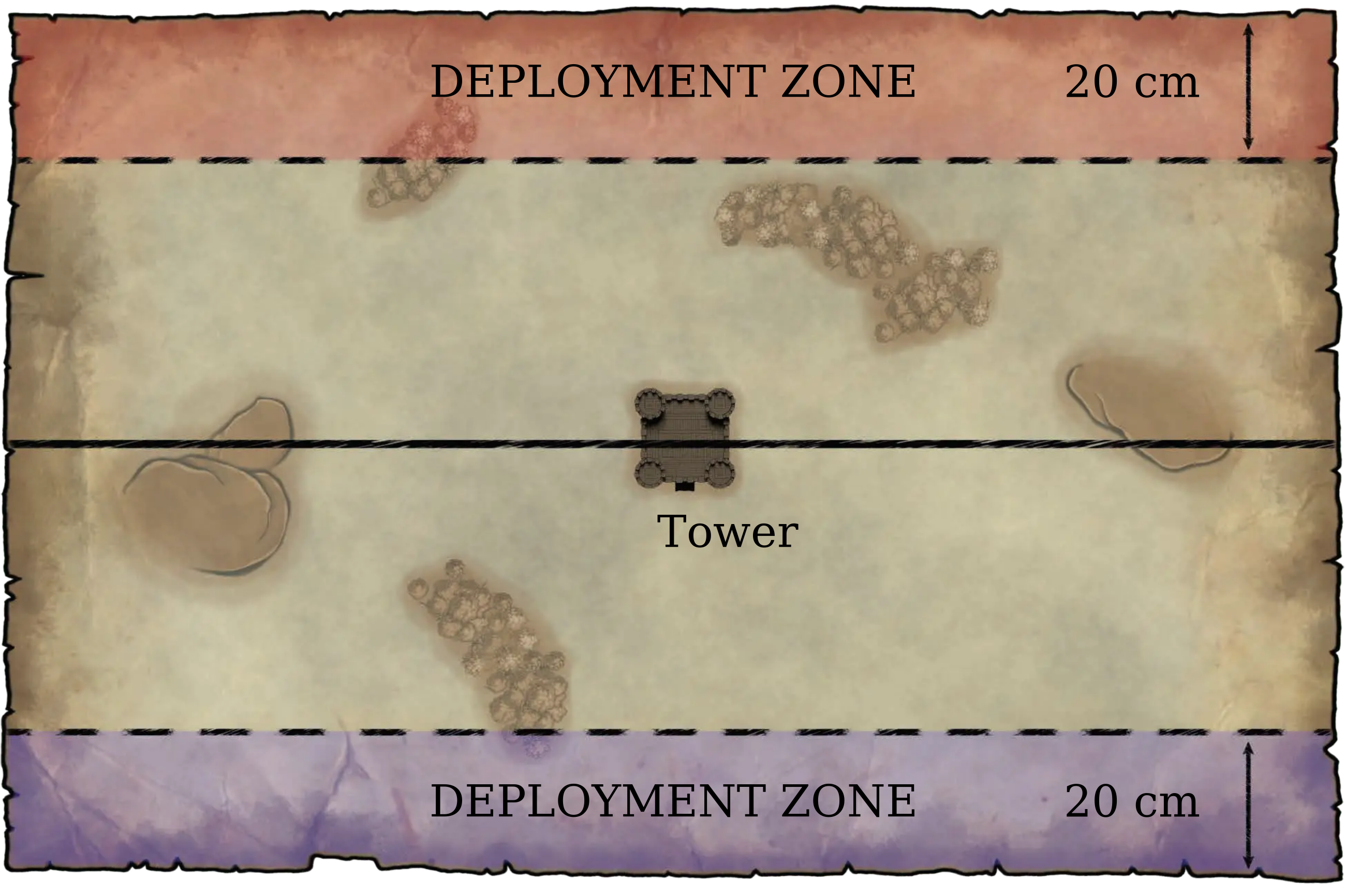
This scenario features a bloody struggle for a tower positioned in the middle of the battlefield. The scenario is designed for 2000 point armies. When playing a smaller game, divide all the Victory Points in the scenario by 2.
Special rules
Along with other terrain, place a tower (or any similar significant terrain feature such as farm house, monolith, shrine etc.) right in the middle of the table. This terrain feature counts as impassable terrain. There should be no other terrain feature within 20cm of the tower.
Deploy your armies as usual (see Setting up armies).
A player controls the tower if at least one of his non-confused and non-flying units is touching the tower while no enemy unit is touching the tower.
Victory points
From the 3rd turn on, a player will be awarded Victory Points at the end of each player’s turn if he controls the tower. The points awarded are as follows:
100 points for controlling the tower.
100 points extra if there is no enemy unit within 10cm of the tower.
100 point extra if there is no enemy unit within 20cm of the tower. This bonus stacks with the previous one.
The game ends when one side withdraws – that happens when one side reaches its break point or when the opponent collects 1000 Victory Points by holding the tower. The game also ends when the agreed turn/time limit runs out (see How long does the battle last?).
The player with more Victory Points is the victor unless he withdrew, in which case the game is a draw (see End of the Battle).
Spoils of war
In this scenario two opposing armies are battling over valuable loot located between their camps. The loot could be well-stocked farm houses, stranded wagons, shards of a rare meteorite, accompanying civilians who got lost during the night or something similar. The scenario is designed for 2000 point armies. When playing a smaller game, divide all the Victory Points in the scenario by 2.
Special rules
After the terrain is set but before deployment, players take turn in placing four loot markers. The markers must be placed within 10cm of the centre line. A loot marker cannot be placed within 10cm of another loot marker or within 20cm or the table edge. After the four loot markers have been placed, deploy your armies (see Setting up armies). After deploying the armies, the player who takes the second turn removes one of the four markers.
Victory points
Apart from destroying enemy units, Victory Points are awarded by claiming the loot markers. If during the game, a non-flying unit finds itself in contact with a loot marker it can attempt to claim it. To claim the loot the unit must receive a successful order. If the order is failed the unit cannot move any further. If the order is successful the active player picks up the loot marker and removes it. The unit doesn’t move and cannot receive any further orders. A unit can only claim one loot marker per turn. Units cannot claim loot by initiative. Units cannot receive an order to claim a loot token if they have already received three orders this turn. Units can only receive orders to claim loot markers individually i.e. no brigade orders.
Claiming a loot marker gives the player a number of Victory Points depending on which turn the loot is claimed:
Turn 1: |
0 Victory Points |
Turn 2: |
100 Victory Points |
Turn 3-4: |
200 Victory Points |
Turn 5+: |
300 Victory Points |
The game ends when one side withdraws – that happens when one side reaches its break point or when the opponent collects 500 Victory Points by claiming the loot. The game also ends when the agreed turn/time limit runs out (see How long does the battle last?).
The player with more Victory Points is the victor unless he withdrew, in which case the game is a draw (see End of the Battle).
At all costs
The scenario is designed for 2000 point armies. When playing a smaller game, divide all the Victory Points in the scenario by 2.
Special rules
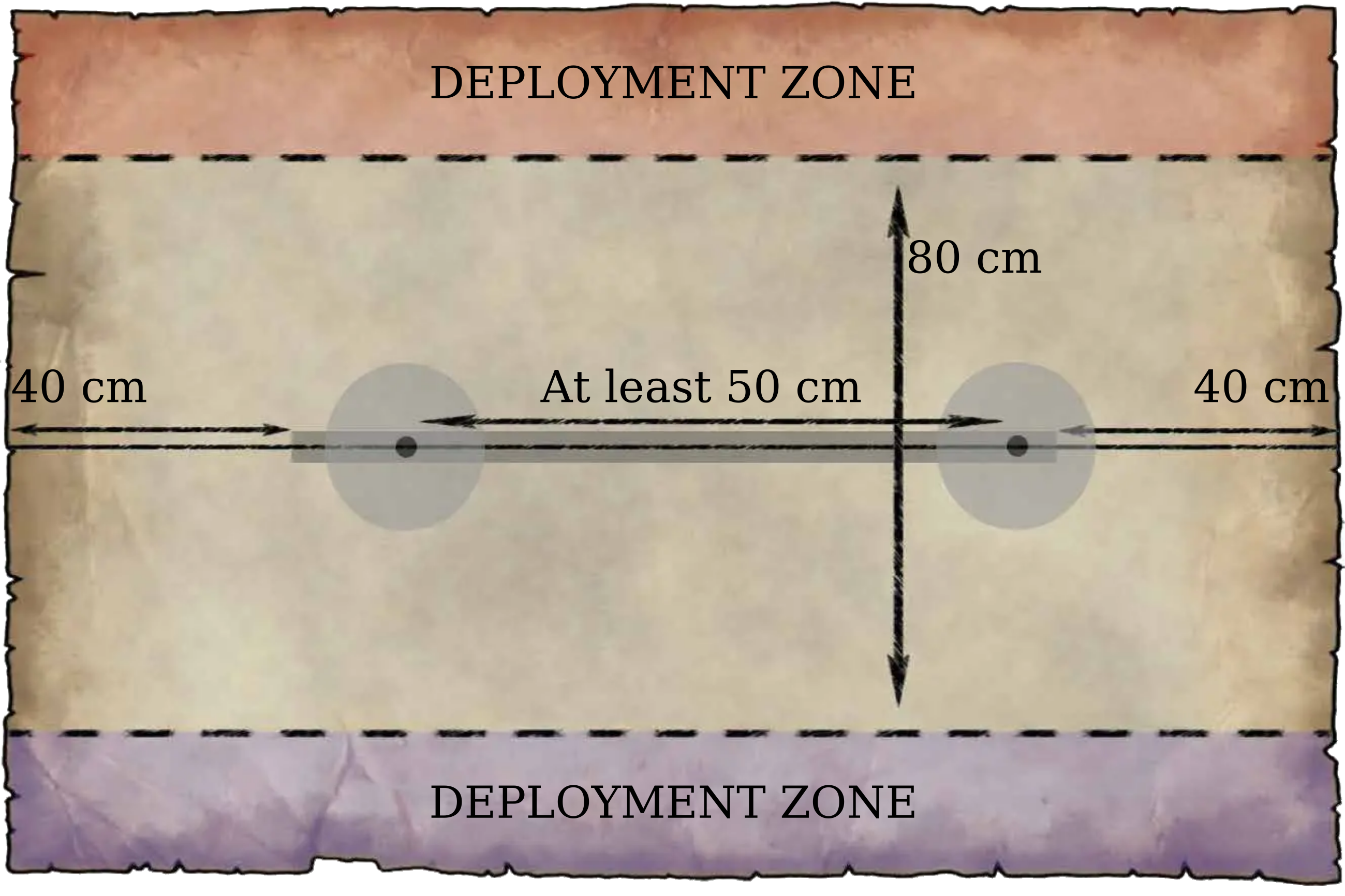
Before setting terrain, players take turns in placing two objective markers on the centre line running parallel to the long table edge. The markers must be at least 40cm from the table edge and at least 50cm from each other. Don’t place any terrain feature within 10cm of the objectives.
Victory points
From the 3rd turn onward check at the end of the each player’s turn whether any player can claim one or both objectives. An objective can be claimed by having a friendly non-flying unit at least partially within 5cm of the objective while there are no opposing units of any kind within 5cm of the objective. A player receives Victory Points depending on whether he is able to claim one or both objectives.
Claiming one objective: 50 Victory Points
Claiming both objectives: 200 Victory Points
The game ends when one side withdraws – that happens when one side reaches its break point or when the opponent collects 500 Victory Points by claiming the the objectives. The game also ends when the agreed turn/time limit runs out (see How long does the battle last?).
The player with more Victory Points is the victor unless he withdrew, in which case the game is a draw (see End of the Battle).
Blood and glory
Special rules
If the army’s general is killed in this scenario, the army doesn’t withdraw. Instead a character with the highest Command value becomes a new general. If there are multiple characters with this value the owning player can choose. The new general extends his command range over the whole battlefield.
Victory points
An enemy unit destroyed in combat by a unit joined by the general is considered to be worth double its point cost. When this happens don’t forget to write it down to keep a record.
The game ends when one side withdraws by reaching its break point or when the agreed turn/time limit runs out (see How long does the battle last?).
The player with more Victory Points is the victor unless he withdrew, in which case the game is a draw (see End of the Battle).
Defending the village
|
This scenario was removed from the 2.1.0 edition of the rulebook. |
In this scenario one player is defending a village and farmsteads against the attacker’s army raiding the country. The attacker’s aim is to burn down as many buildings as possible, while the defender is trying to prevent this from happening. The scenario is designed for 2000 point armies.
Special rules
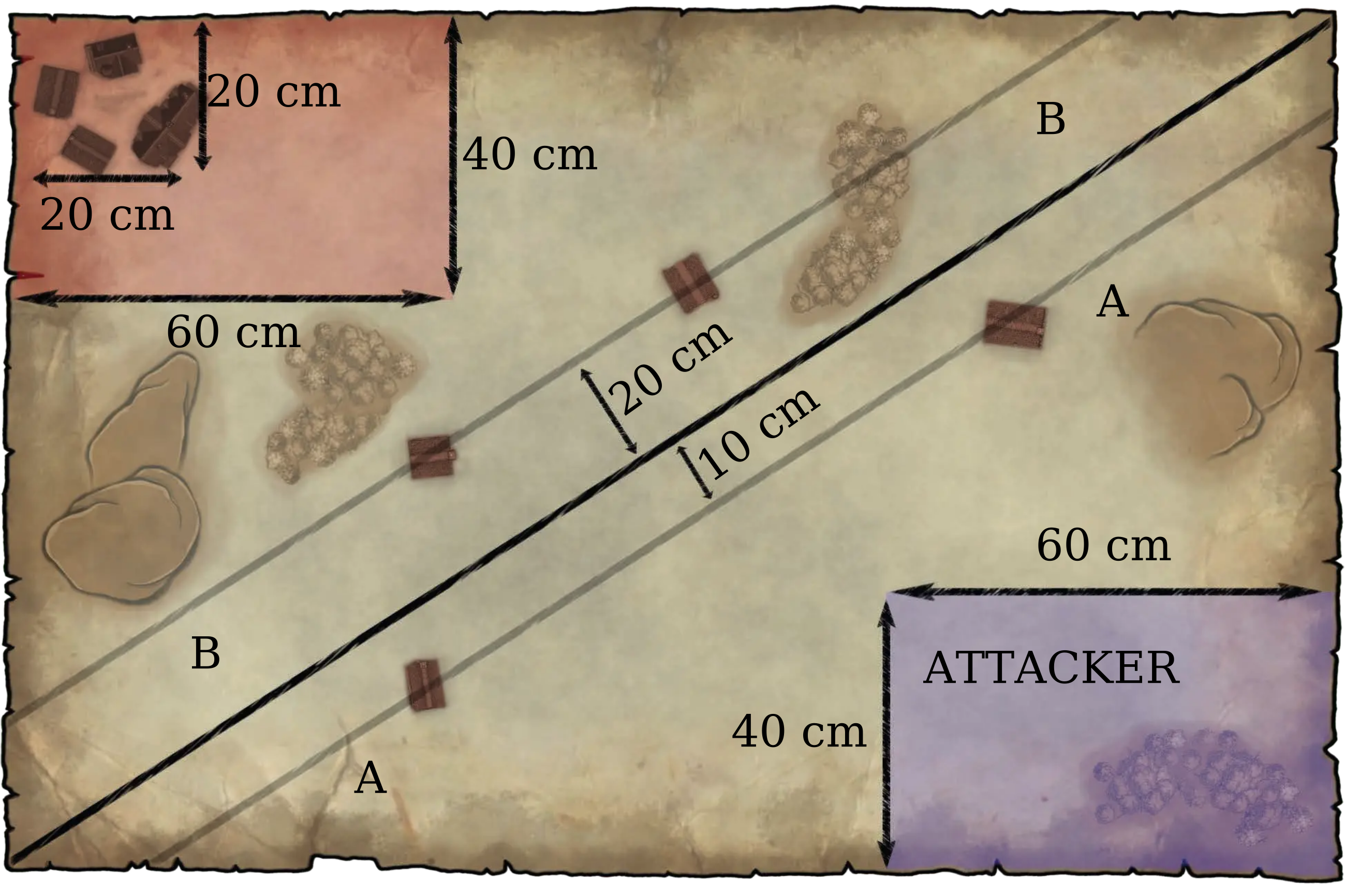
Along with the other terrain, place a village in the defender’s corner. The village should be approximately 20cm × 20cm. Starting with the attacker, players then take turns in placing four additional buildings. Two buildings are placed 10cm from the diagonal axis on the attacker’s half of the table (line A on the diagram). Two other buildings are placed 20cm from the axis on the defender’s side (line B on the diagram).
The attacker deploys first in his deployment zone (see the diagram below). The defender then deploys, and goes first.
Any stand from an attacker’s unit of non-flying infantry, cavalry or chariots that is not in combat or confused and is touching a building can try and set it alight by rolling a 6 in the combat phase. Once the building is on fire, it is deemed to have been burned down. The village counts as one building for this purpose.
The game ends when one side withdraws or in a pre-agreed way (see How long does the battle last?).
Victory points
Victory Points are gained for defending and destroying the buildings, according to each army’s role.
2 points for breaking the enemy.
1 point for the attacker for every burnt building on line A.
2 points for the attacker for every burnt building on line B.
3 points for the attacker for burning the village.
1 point for the defender for defending the village.
2 point for the defender for every unburnt building on line B.
3 points for the defender for every unburnt building on line A.
A broken army cannot win the game. It can either lose or draw.
Wagon train
|
This scenario was removed from the 2.1.0 edition of the rulebook. |
A supply wagon train escorted by a patrol force is suddenly ambushed by the enemy. The defender’s task is to protect and bring to safety as many wagons as possible. The attacker’s aim is to destroy the wagons and loot them for bounty. The scenario is designed for 2000 point armies.
Special rules
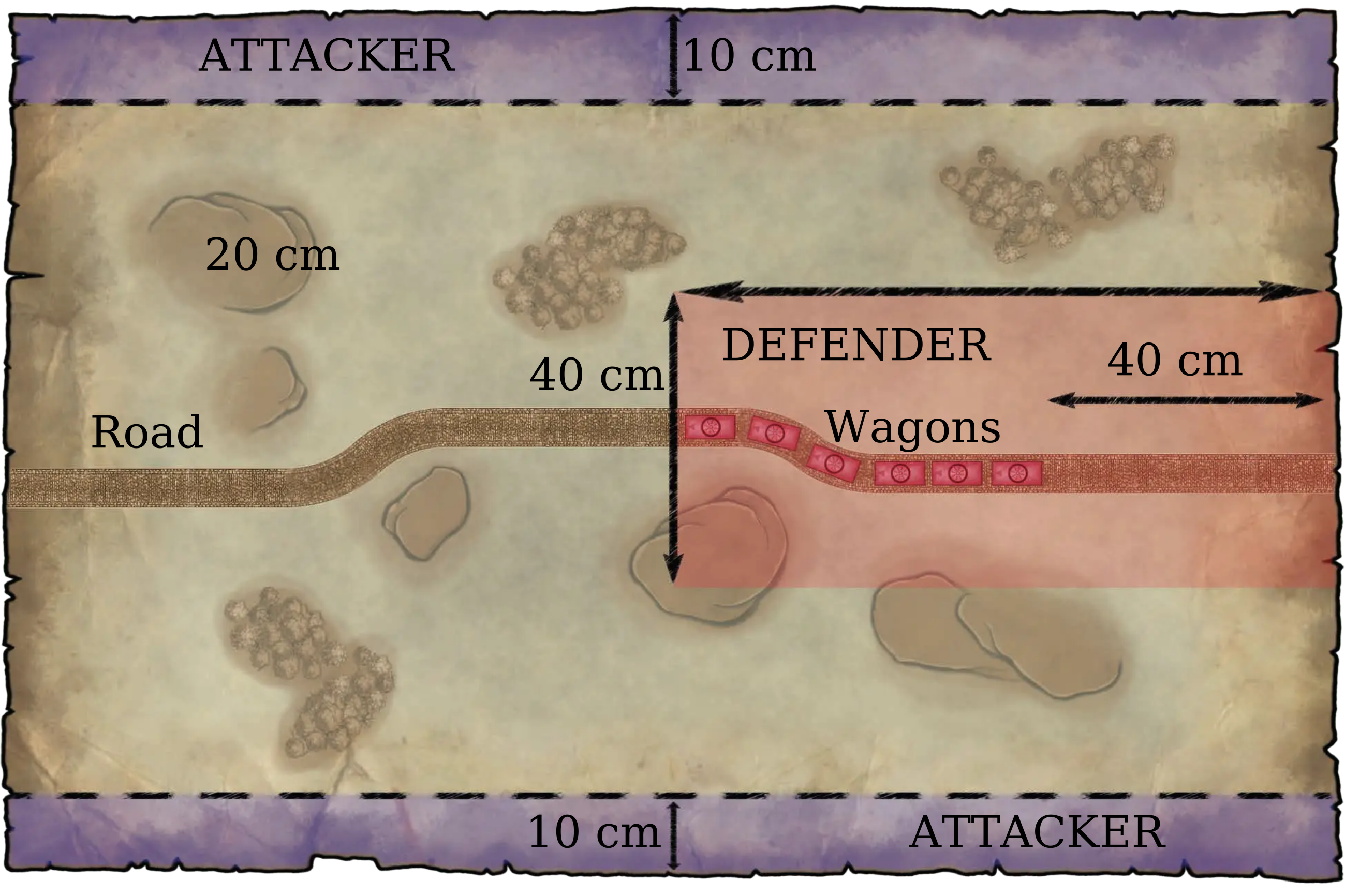
Along with the other terrain place a road running through the middle of the table. The defender places 6 wagons on the road so that no wagon is more than halfway across the table or closer than 40cm to the defender’s side of the table (see diagram). The rest of the defender’s army is then deployed within their deployment zone. Then the attacker deploys. The defender goes first.
Wagons can move 20cm once in the Command phase, heading in the direction leading away from the defender’s side of the table. They don’t need to be given orders to do this. Alternatively they can be given individual orders, in which case they can move once 20cm along the road in whatever direction you wish, or 10cm cross-country. A wagon can’t be given two or more orders in a turn. Any wagon that leaves the table by any edge counts as having been saved. Wagons cannot be driven back by missile fire.
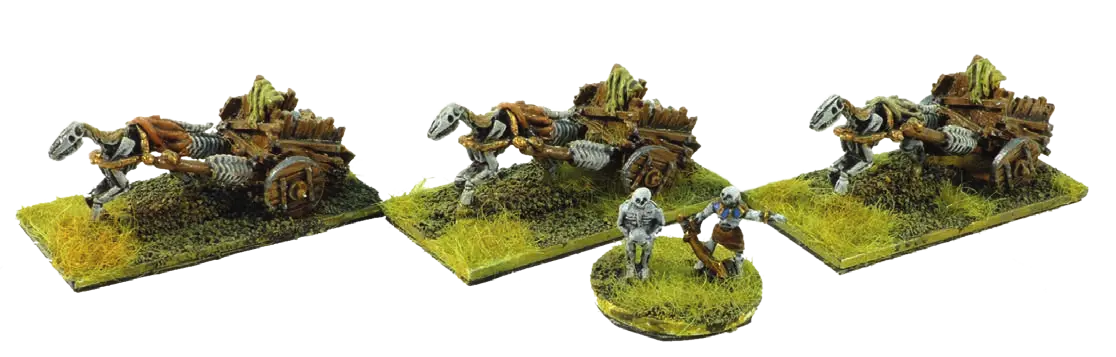
The wagons can be simply destroyed, or destroyed and then looted. A wagon is destroyed when at least one attack (shooting, magic or close combat) is inflicted. A unit engaged in close combat cannot attack a wagon. To loot a wagon an enemy unit must destroy it and then remain in contact with it until the unit’s following Command phase. Only infantry and cavalry can loot wagons.
The game ends when one side withdraws or in a pre-agreed way (see How long does the battle last?).
Victory points
2 points for breaking the enemy.
1 point for the attacker for each wagon destroyed in close combat.
3 points for the attacker for each wagon destroyed and looted. The unit that looted a wagon must survive the battle to receive the points.
1 point for the defender for every non destroyed wagon.
3 points for the defender for every wagon saved.
A broken army cannot win the game. It can either lose or draw.