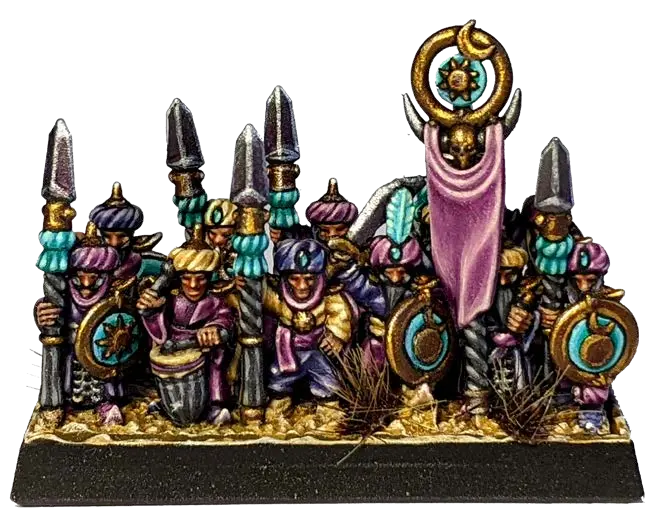
Araby
 The land of Araby lies along the north west coast of the
Southlands between the Atalan mountains and the Great
Ocean. To the east is the Great Desert that separates Araby
from the Lands of the Dead. Although the climate is dry and
hot the western winds carry moisture-laden clouds that give up
their water as they are suddenly forced upwards by tall Atalan
peaks.
The land of Araby lies along the north west coast of the
Southlands between the Atalan mountains and the Great
Ocean. To the east is the Great Desert that separates Araby
from the Lands of the Dead. Although the climate is dry and
hot the western winds carry moisture-laden clouds that give up
their water as they are suddenly forced upwards by tall Atalan
peaks.
The Arabians are great sailors and have for many centuries fished the adjoining seas and traded south along the coast, northwards to the Old World, and westwards as far as Ulthuan. The High Elves do not permit Arabian vessels to travel further west than Ulthuan itself, their high-prowed dhows are a common sight in the outer harbours of Lothern. For their part the High Elves maintain a mercantile presence in Copher and Lashiek as they have since time immemorial. The Elves and men of Araby had dealings even during the long centuries when the Elves abandoned the Old World.
The mostly densely populated part of Araby lies to the north of the River of the Serpent; the largest waterway in the land and one of the few rivers that flows all year long. This land is home to four great cities: Lashiek, Copher, Martek, and Alhaka or (as it is sometimes rendered) Al-haikk which means City of Thieves in the Arabian tongue. Each of these cities and the surrounding lands forms an independent principality ruled over by a Sultan or Caliph. South of the River of Serpents the land is not so fertile and the terrain is much dryer. East of the Atalan mountains the great desert stretches for hundreds of miles towards the Land of the Dead.
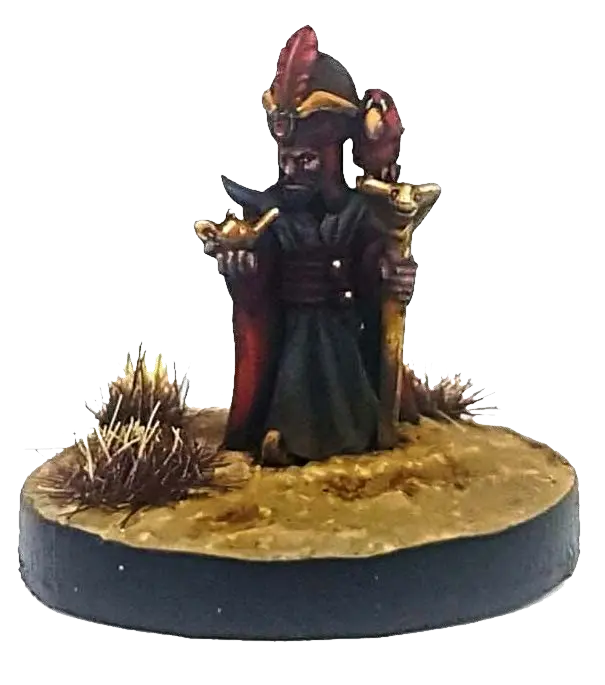
Araby lies far from the world’s poles and therefore from the ultimate source of the magical winds that blow from the north. As a result magic that is common in the Old World is far more diffuse in Araby so it is much more difficult for wizards to work their spellcraft. Arabian magic has therefore developed quite differently than that of other men. Arabian Wizards use their powers to control elemental spirits of the desert, djinn, efreets, genies and such-like spirits. These spirits are worshipped by the superstitious people of Araby. It is commonly believed that the spirits must be appeased with prayers and small tokens of respect such as gifts of food and drink.
The rulers of Araby maintain their own armies based upon the great cities and tributary tribes that live in the surrounding lands. The leaders of these tribes are called Emirs or, amongst the desert tribes of the south and east, Sheiks. The rulers of cities and their surrounding lands are called Sultans and the Sultan of Alhaka is the acknowledged overlord of all the other cities of Araby. In consequence he is also known as the Great Sultan – the ruler of all Araby.
The Sultans are proud of their troops and especially of their cavalry. It is popularly supposed that the horses of Araby are descended from Elven horses brought over from the west many centuries ago. They are graceful and swift creatures and very highly valued. The very best of the Arabian foot soldiers are also well equipped, with steel armour, keen tulwars, gleaming helmets, and fine silk clothing. These household troops or guards accompany the Sultans when they travel beyond the grounds of their magnificent palaces. The loyalty of these troops is famous. They are amply rewarded with riches, luxuries, and prestige as a result. As well as these regular and garrison troops there are the irregular fighters from the desert tribes, including camel mounted warriors from the lands to the south and east.
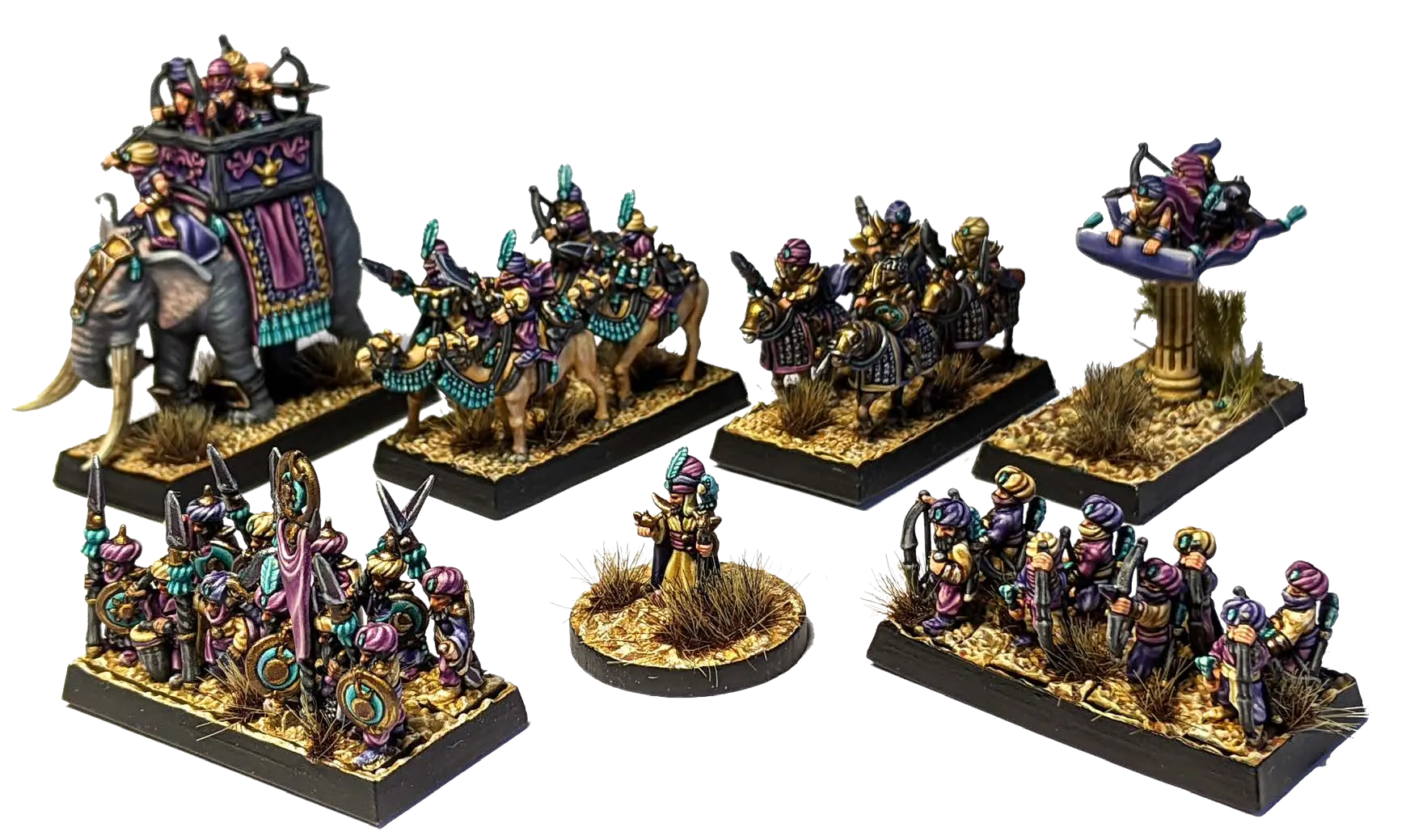
Araby army selector
| Troop | Type | Attacks | Hits | Armour | Command | Unit size | Points per unit | Min/max | Special |
|---|---|---|---|---|---|---|---|---|---|
Spearmen |
Infantry |
3 |
3 |
6+ |
– |
3 |
45 |
2/– |
– |
Bowmen |
Infantry |
3/1 |
3 |
– |
– |
3 |
55 |
2/– |
– |
Guards |
Infantry |
3 |
3 |
5+ |
– |
3 |
65 |
–/4 |
|
Knights |
Cavalry |
3 |
3 |
4+ |
– |
3 |
110 |
–/– |
– |
Desert Riders |
Cavalry |
3/1 |
3 |
6+ |
– |
3 |
75 |
–/– |
|
Camel Riders |
Cavalry |
3/1 |
3 |
5+ |
– |
3 |
100 |
–/2 |
|
Magic Carpets |
Cavalry |
1/2 |
3 |
6+ |
– |
3 |
85 |
–/1 |
|
Elephants |
Monster |
5 |
4 |
5+ |
– |
3 |
200 |
–/1 |
|
|
|||||||||
General |
General |
+2 |
– |
– |
9 |
1 |
125 |
1 |
– |
Hero |
Hero |
+1 |
– |
– |
8 |
1 |
80 |
–/2 |
– |
Wizard |
Wizard |
+0 |
– |
– |
7 |
1 |
45 |
–/1 |
– |
Flying Carpet |
Chariot mount |
+0 |
– |
– |
– |
– |
+10 |
–/1 |
|
Elephant |
Monstrous mount |
+2 |
– |
– |
– |
– |
+65 |
–/1 |
|
Djinn |
Monstrous mount |
+2/2 |
– |
– |
– |
– |
+90 |
–/1 |
Special rules
- 1. Guards
-
The Sultan’s Guards are so unquestioningly loyal that they will obey the first order given to them each turn on the Command roll of 10 or less so long as the order comes from the General himself. No penalties are applied to this order. Further orders are given using the General’s normal command value and penalties. This applies only to Guards and not to brigades that include Guards and other units.
- 2. Desert Riders
-
Desert Riders have a shooting range of 15cm and 360° vision – stands in this unit can draw line of sight from all edges for the purpose of evading and shooting, including shooting at charging enemies. Note that this unit still needs Line of Sight from its front edge to charge an enemy.
- 3. Camel Riders
-
Camel Riders ignore distance modifiers when commands are issued to them. This applies only to Camel Riders and not to brigades that include Camel Riders and other units. Remember that characters are still bound by their maximum command ranges and cannot issue orders to units beyond range. This represents their fierce self-reliance and their mounts’ instinctive sense of direction allowing them to operate effectively far from their own battle lines.
Because Camels are such intractable creatures all orders are issued with a Command penalty of −1, this penalty applies to any unit of Camel Riders or to any brigade that contains one or more units of Camel Riders.
- 4. Magic Carpets
-
Magic carpets can fly – they have been rated as aerial ‘cavalry’ as this is the closest categorisation to their type. Because they are awkward flyers, they can be pursued by any type of enemy troops. They have a shooting range of 15cm and 360° vision – stands in this unit can draw line of sight from all edges for the purpose of evading and shooting, including shooting at charging enemies. Note that this unit still needs Line of Sight from its front edge to charge an enemy.
- 5. Elephants
-
Elephants cause terror and cannot be brigaded with cavalry.
If an Elephant unit would for any reason become confused, it will stampede instead. Their stampede ceases at the end of their player’s next Command phase. Stampeding Elephants cannot be given orders or use initiative. At the beginning of the Command phase, prior to resolving any movement generated by Initiative, roll one D6 for each affected unit:
1–2
Move towards the nearest enemy unit as far as possible. If the Elephants contact an enemy they charge; a friendly unit, they burst through.
3–4
Move directly away from the nearest enemy unit as far as possible. If the Elephants contact an enemy they charge; a friendly unit, they burst through.
5
Move towards the nearest friendly unit as far as possible. If the Elephants contact any unit (friendly or enemy), they charge.
6
Move directly away from the nearest friendly unit as far as possible. If the Elephants contact any unit (friendly or enemy), they charge.
A stampeding Elephant unit that charges will fight in the Combat phase. It counts as an ‘enemy’ for the duration of the combat. If the Elephants win a combat round then they must pursue if possible and will continue to do so each round. Should their opponents be destroyed, they will not advance but will halt.
- 6. Flying Carpet
-
This is considered to be a flying chariot mount.
- 7. Elephant
-
The Elephant mount is a standard monster mount except that a character mounted on an Elephant cannot join a unit of friendly cavalry.
A unit joined by a character riding an Elephant causes Terror.
- 8. Djinn
-
The Djinn accompanies its master and can transform both of them into a whirlwind enabling the stand to fly as for a normal flying mount. If the Wizard has a Djinn he can also cast the Curse of the Djinn spell with a +1 casting bonus.
Note that unusually the Djinn has +2 shooting attacks – these are added to a stand from a unit that the character has joined and can only be used when the character joins a unit (see Characters that shoot).
If the Wizard is accompanied by a Djinn then any unit he joins causes Terror.
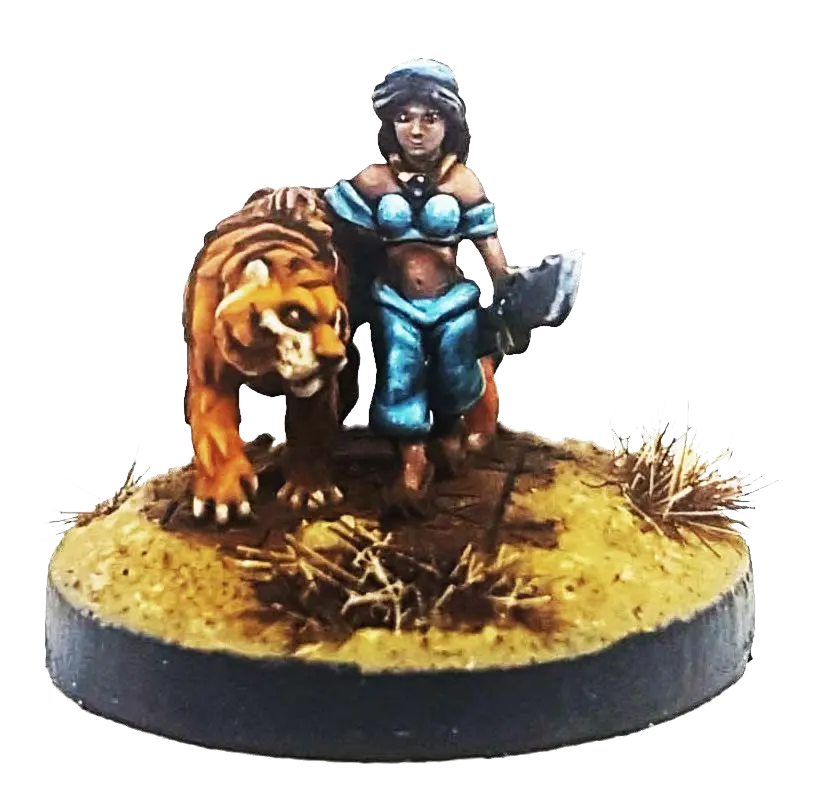
Araby spells
Sand Storm
4+ to cast Range 30cm
The Wizard commands the desert spirits to engulf his foes in a swirling cloud of choking sand and dust.
The spell is cast upon the Wizard himself and affects all enemy units within 30cm of the stand. The spell lasts until the end of the opposing player’s following turn.
The spell affects the opposing army’s ability to issue commands. All enemy units within 30cm of the Arabian Wizard suffer a −1 Command penalty. This penalty is applied when each order is issued. For example, a unit might therefore be within 30cm of the Wizard for one order but not for a second, for example.
Mirage
4+ to cast Range 60cm
The Wizard creates the illusion of a huge host of fearsome warriors, bearing down inexorably upon his startled foes.
To use this spell the player will need an additional unit chosen from the Araby list – this can be infantry, cavalry or monsters it does not matter which. This unit becomes the ‘illusion’ and is immediately placed within 60cm of the Wizard and more than 20cm from any enemy units. The illusionary unit cannot move or fight – for it isn’t really there! However, the illusionary unit is treated as if it were real by the enemy up until such time as an enemy unit charges into contact with it, touches it as an incidental contact during combat, advances upon it, or brings it into combat in any other fashion. This means, for example, Command penalties are suffered for proximity, and enemy shooters are obliged to target the illusion if it is the closest target – it cannot be harmed of course! The illusionary unit is also dispelled immediately if the Araby player moves any of his units or characters through it.
Whilst the Mirage unit is on the battlefield the Wizard cannot cast any other spells – if the player wishes the Wizard to cast a new spell the Mirage comes to an end and the Wizard can then attempt a new spell as normal.
Sunstrike
5+ to cast Range 30cm
Bright beams of burning energy leap from the Wizard’s eyes and scythe through all before him.
Draw an imaginary line 30cm long from the Wizard’s stand in any direction you wish. The line will pass through any intervening units but not beyond terrain that would normally stop a missile shot, e.g. over the crest of a hill, more than 2cm of woodland, and so forth.
Each unit under the line takes three shooting attacks worked out in the usual way – all relevant modifiers are applied. Note that this spell can easily affect several units and will affect all units that fall beneath its path (including you own). Unengaged units can be driven back by Sunstrike as with ordinary shooting whether friend or foe. Engaged units cannot be driven back but carry over any hits that are scored into the first round of combat. Hits caused by the Sunstrike count as having been struck in the combat itself.
Curse of the Djinn
6+ to cast Range 30cm
The Wizard channels the immense power of the Djinn through his own body and lays a terrible curse upon his foes.
The Wizard may cast this spell on an enemy unit within range. The target unit must re-roll all successful armour saves for the duration of the following close combat phase.
If the Wizard has a Djinn then he adds 1 to his dice roll when casting this spell, and therefore casts successfully on a 5.